Tropical Hammock Silhouettes Among Palm
First Impressions: A Quiet, Confident Tropical Vibe
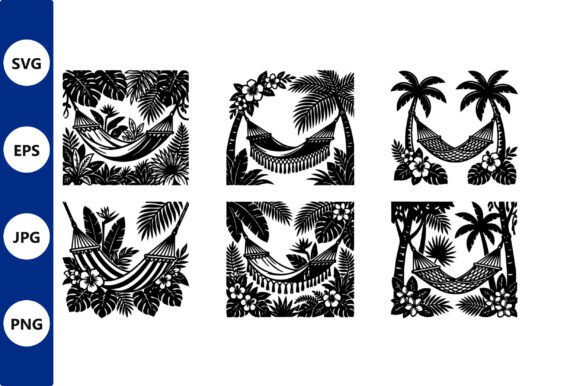
When I opened Tropical Hammock Silhouettes Among Palm, I didn’t see just another beachy graphic—I saw a mood with stitching potential. The black-and-white vector silhouettes of hammocks strung between palm trunks, softened by layered foliage and hibiscus outlines, land somewhere between serene and intentional. There’s no clutter, no forced cuteness—just clean negative space, balanced weight, and that rare kind of simplicity that reads clearly even at small scale. As an embroidery designer who’s stitched hundreds of tropical motifs, I immediately thought: this isn’t background filler. It’s a statement piece for products where calm matters—think linen pillow covers for a boutique bedroom line, or a minimalist embroidered tea towel for a coastal kitchen brand.
Where It Shines in Real Embroidery Projects
I tested Tropical Hammock Silhouettes Among Palm on a medium-weight cotton tote bag first—the kind Etsy sellers use for summer launches. Stitched in matte black thread on natural canvas, the high-contrast silhouette held up beautifully. No bleeding, no fuzzy edges. The palm fronds have enough curve to feel organic, but not so much that satin stitch struggles; the hammock lines are bold enough to read as structure, not just decoration. That makes it ideal for custom apparel like sweatshirts and relaxed-fit tees—especially when you want subtlety over flash. I also ran it on a lightweight baby blanket (cotton voile + tear-away stabilizer), and the open layout prevented stiffness. Parents appreciate softness, and this design delivers without sacrificing visual impact.
For embroidered patches, it’s a natural fit—clean edges mean crisp heat-seal or sew-on application. And because it’s built from silhouettes—not intricate linework—it translates well to applique designs: you could easily adapt the hammock shape as a felt cutout, then stitch the palms and flowers around it. Small business owners will find it versatile across categories: aprons for a tropical café, cap fronts for a resort gift shop, even holiday embroidery on linen napkins for a “winter escape” collection.
Where to Pause—and Why
This isn’t a one-size-fits-all embroidery file. Its strength lies in its openness—but that same openness means it needs thoughtful placement. On curved surfaces like caps, test the outermost palm fronds first: slight distortion can blur the silhouette’s elegance. With stretchy fabric (like jersey tees), use cut-away stabilizer underneath—those long, thin frond ends can shift mid-stitch if the base moves. And while the design avoids tiny interior details, the hibiscus centers and hammock rope textures sit right at the edge of what dense fill stitch handles cleanly on small hoop sizes (under 4”). If you’re embroidering baby onesies or toddler hats, simplify those elements manually—or confirm the file includes alternate low-detail versions.
Also note: because it relies on contrast, Tropical Hammock Silhouettes Among Palm performs best on light-to-mid fabrics. On dark fabric, you’ll need either white thread (which changes the mood) or careful underlay planning to prevent shadowing. And while it’s labeled as Illustrations, remember it’s a Graphics-class asset—not a pre-digitized machine embroidery design. You’ll need digitizing or conversion before stitching, unless your vendor provides ready-to-hoop files.
What This Design Says About Your Finished Product
Customers don’t just buy a motif—they buy the feeling behind it. Tropical Hammock Silhouettes Among Palm signals intentionality. It tells buyers your handmade product is curated, not generic. That matters for Etsy sellers competing with mass-printed alternatives—and for boutique owners building seasonal collections around authenticity. When stitched cleanly, it elevates perceived value: a $28 linen pillow cover becomes a gift-worthy item; a $45 embroidered sweatshirt feels like a capsule wardrobe staple. It also supports brand consistency—especially if you pair it with other high-contrast, nature-based design assets (think monochrome seashells or minimalist waves).
Practical Designer Notes Before You Stitch
- Always test on scrap fabric first—especially with textured weaves or blends. That lush foliage reads differently on burlap than on smooth poplin.
- Check thread color contrast early. Black-on-cream? Yes. Navy-on-charcoal? Reconsider—or add a white underlay.
- Review stitch density. Dense fill in the palm trunks can cause puckering on lightweight cotton. Adjust density or switch to a lighter fill stitch if needed.
- Confirm hoop size compatibility before committing to production runs. Some versions may exceed standard 5x7” hoops.
- Inspect small details like hibiscus petal tips and hammock knots—they’re subtle but carry the design’s personality.
- Test in black-and-white mockups before finalizing digital previews. This design lives in contrast—don’t rely on color alone.
- Use proper stabilizer: cut-away for knits, tear-away for stable wovens, and optional topping for napped fabrics like terry cloth.
- Verify licensing before selling finished items or bundling into digital embroidery kits. Not all digital embroidery files include commercial rights.
A Final Thought for Creative Entrepreneurs
Tropical Hammock Silhouettes Among Palm won’t shout. It doesn’t need to. Its power is in restraint—in how a single, well-placed hammock between two palms can evoke vacation, rest, and quiet joy. For crafters making personalized gifts, for apparel decorators building summer collections, for small shop owners curating meaningful merchandise: this is the kind of embroidery project that earns repeat customers. Not because it’s flashy, but because it feels true. Stitch it with care, pair it with quality materials, and let the simplicity do the work.