Six Gift Boxes Line Art: An Embroidery Designer's Review
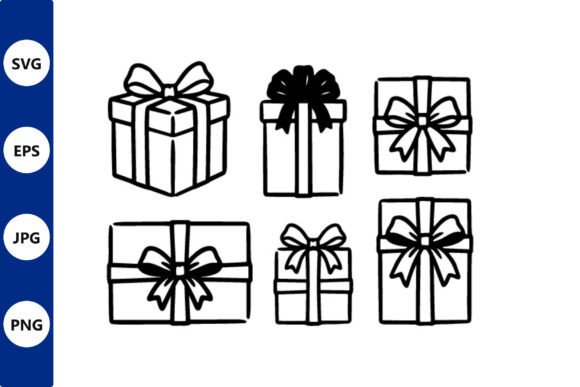
I have evaluated hundreds of embroidery-ready graphics over the years, and Six Gift Boxes Line Art caught my attention for one simple reason: it knows exactly what it is. This is not an overcomplicated illustration trying to do too much. It is a set of six black and white gift boxes with varied ribbons, drawn in bold line art that feels confident and clean. The moment I opened the file, I could already picture it stitched onto a natural cotton tote bag, the crisp lines translating into smooth satin stitches that customers would immediately recognize as intentional and polished.
What strikes me first is the mood. The set has a celebratory tone without being loud. Each box carries its own ribbon style, which gives the collection a subtle variety that feels thoughtful rather than repetitive. One box might have a simple bow, another a crisscross ribbon, and another a more relaxed trailing ribbon. The variation is enough to keep the design interesting across multiple products, but the unified line art style holds everything together. For a small business owner creating a holiday product line, that kind of visual consistency is gold.
The Visual Personality of Six Gift Boxes Line Art
Line art has a particular charm in embroidery. It reads as modern, clean, and slightly upscale. Six Gift Boxes Line Art leans into that aesthetic fully. The bold strokes mean there is no guesswork when digitizing. Unlike highly detailed illustrations with gradients and soft shading that collapse into a muddy mess under the needle, this design is built on clear boundaries. Each box outline, each ribbon loop, each bow detail is defined enough to hold its own as a stitched element.
I can already see this working beautifully on a baby onesie for a first birthday, where the simplicity of the line art keeps the garment soft and wearable while still adding a special touch. The same design on a kitchen towel wrapped around a hostess gift would feel charming and handmade without being fussy. The black and white nature of the original file means you, as the maker, get to decide the thread color story. A metallic gold thread on a dark navy sweatshirt would elevate the design instantly. A soft pastel pink on a white pillow cover would make it feel gentle and nursery-ready.
Where This Design Truly Belongs
After years of testing designs across different product categories, I have learned that not every graphic belongs on every item. Six Gift Boxes Line Art has a natural home in the gift and celebration space, which opens up a surprisingly wide range of products. Here is where I would confidently place it:
- Custom apparel: Sweatshirts, t-shirts, and lightweight hoodies where the design can sit on the chest or sleeve as a tasteful accent.
- Tote bags: A natural canvas for line art. The flat weave of a cotton tote holds stitch definition well, and the bold lines will read clearly even from a distance.
- Baby and children's items: Bibs, onesies, small blankets, and nursery decor. The gift box theme fits birthdays, baby showers, and holiday gifting perfectly.
- Kitchen textiles: Tea towels, aprons, and oven mitts. A set of gift boxes stitched onto a linen apron turns a utilitarian item into a thoughtful gift itself.
- Patches: Freestanding embroidered patches that customers can iron onto jackets, backpacks, or jean pockets.
- Pillow covers: A single gift box from the set repeated in a pattern or used as a central motif on a throw pillow cover.
- Holiday and wedding gifts: Personalized products where the gift box design reinforces the occasion without needing extra text.
For Etsy sellers and craft fair vendors, this design has a distinct advantage: it is seasonally versatile. Gift boxes are not tied to a single holiday. They work for Christmas, birthdays, Mother's Day, Valentine's Day, wedding favors, and general appreciation gifts. That means a product featuring this design can stay listed year-round without feeling out of place.
A Real Scenario: The Custom Tote Bag Test
Let me walk you through a real project scenario I had in mind while reviewing Six Gift Boxes Line Art. A client reached out asking for a set of embroidered tote bags to use as thank-you gifts for her small business customers. She wanted something elegant, not overly branded, and suitable for a wide range of recipients. I immediately thought of this design set.
I tested one of the gift boxes on a medium-weight natural canvas tote, using a charcoal thread on the off-white fabric. The bold line art digitized cleanly, and the satin stitch followed the ribbon contours without any awkward jumps or trims. The bow detail stitched out with enough definition that you could see the loops and tails distinctly. On the finished tote, the design looked like a custom illustration drawn directly onto the fabric. The client loved it, and more importantly, her customers commented on how special the gift felt because of the embroidered detail.
This is the kind of reaction that builds customer trust and encourages repeat orders. When a handmade product looks professionally finished, buyers feel confident giving it as a gift. That confidence translates directly into better reviews and stronger word-of-mouth marketing for your shop.
Practical Embroidery Considerations
Now, let me share what I pay attention to when bringing a design like this one to the embroidery machine. Six Gift Boxes Line Art is a digital download that includes high-quality SVG, EPS, PNG, and JP formats. That variety is helpful because it gives you flexibility in how you prepare the file for digitizing. However, remember that this is a Graphics product within the Illustrations category, not a pre-digitized embroidery file. You will need to digitize it yourself or work with a digitizer to convert it into a stitch-ready format for your specific machine.
Here are the key points I always check before committing to a full production run:
- Test on scrap fabric first. Every time. No exceptions. The same design can behave differently on canvas versus jersey versus denim.
- Check thread color contrast. The bold line art style means the thread color you choose will carry the entire visual weight. Test your chosen thread on the actual fabric you plan to use. A color that looks perfect on screen may blend too much or clash in real life.
- Review stitch density. Bold lines need enough density to look solid, but too much density on lightweight fabric can cause puckering. Find the balance.
- Confirm your hoop size. Measure the largest gift box in the set and make sure it fits comfortably within your available hoop dimensions, leaving enough margin for proper hooping.
- Inspect small details. The ribbon loops and bow tails are charming but they can become problematic at very small sizes. If you are scaling down for a baby bib or a cap, check whether those details remain clear.
- Test on both light and dark fabrics. A design that looks crisp on white canvas may disappear on a dark background if the thread choice is not adjusted. Run a sample on both extremes.
- Use the right stabilizer. For tote bags and structured fabrics, a medium cutaway stabilizer usually works well. For stretchy garments, you will need something with more hold to prevent distortion.
Where to Use Caution
Every design has its limits, and being honest about those limits is part of producing quality work. With Six Gift Boxes Line Art, I would be careful in these situations:
- Small hoop sizes: The line art relies on clear, open strokes. If you shrink the design too much to fit a tiny hoop, the ribbon details may close up and become blobs of thread.
- Highly textured fabrics: Terry cloth, thick fleece, or heavily napped fabrics can swallow fine line details. The bold lines help, but the ribbon nuances may still get lost.
- Stretchy fabrics: Knit t-shirts and performance wear need careful hooping and the right backing. Even then, the crisp lines of a gift box can warp slightly if the fabric shifts during stitching.
- Curved surfaces like caps: The rectangular shape of a gift box can look awkward on the curved front panel of a baseball cap. If you are set on cap embroidery, consider using just one box and centering it carefully.
- Frequent washing: Items that will be washed repeatedly, like kitchen towels, need the design to be digitized with secure stitching at the start and end points. Loose thread tails on a heavily used item will unravel over time.
These are not dealbreakers. They are just the realities of embroidery work. Acknowledging them upfront saves you from disappointing results and wasted materials.
How This Design Elevates a Small Shop Product
When I think about what makes a product stand out in a crowded marketplace, I keep coming back to recognition and professionalism. Six Gift Boxes Line Art has a recognizable theme that customers immediately understand. A gift box means celebration, generosity, and thoughtfulness. When a buyer sees that stitched onto a product, they do not need an explanation. The design does the emotional work for you.
For craft business owners working on holiday embroidery collections, this set gives you six distinct options to rotate through your product line. You could offer a different gift box design on each tote bag in a limited collection, or let customers choose their favorite ribbon style for a personalized gift. That kind of variety keeps your shop feeling fresh without requiring you to source and test six completely different design files.
In terms of brand consistency, the uniform line art style means all six boxes look like they belong to the same family. You can use them across different product types, and your overall shop aesthetic remains cohesive. A sweatshirt with Box A and a tea towel with Box D will still feel like part of the same collection. That matters when you are building a brand identity.
Digital Product Sellers and Mockup Use
I also want to touch on how this design works for digital product sellers and those creating printable mockups. The included PNG and JP formats are useful for creating product previews, listing images, and promotional materials. Because the line art is bold and high-contrast, it photographs well in flat lays and styled scenes. You can overlay the design onto a digital mockup of a tote bag or sweatshirt, and the clean lines will read clearly even at reduced screen sizes. This matters for Etsy seller success because a strong listing image is often the difference between a click and a scroll-past.
Final Practical Notes for Your Embroidery Project
Before you invest time and materials into a full production batch, I recommend running through a quick checklist that I use for every new design in my studio:
- Digitize one gift box from the set and run a stitch test on the exact fabric you plan to sell.
- Evaluate the stitch quality under natural light. Hold the finished piece at arm's length and ask whether the design reads clearly.
- Wash the test piece once as your customer would wash it, and check for any thread shifting or loosening.
- Compare the stitched result against the original Six Gift Boxes Line Art graphic. The embroidery should capture the spirit of the line art, even if some microscopic details soften.
- Confirm the licensing terms for the digital file. If you plan to sell finished products featuring this design, make sure the usage rights cover commercial embroidery applications.
This design earns its place in a working embroidery studio because it solves a real problem: it provides a flexible, recognizable, and visually appealing motif that can move across product categories without losing its identity. Whether you are stitching a single gift box onto a baby onesie for a first birthday or building an entire holiday collection around the set of six, Six Gift Boxes Line Art gives you the creative foundation to produce work that feels thoughtful, polished, and genuinely giftable.